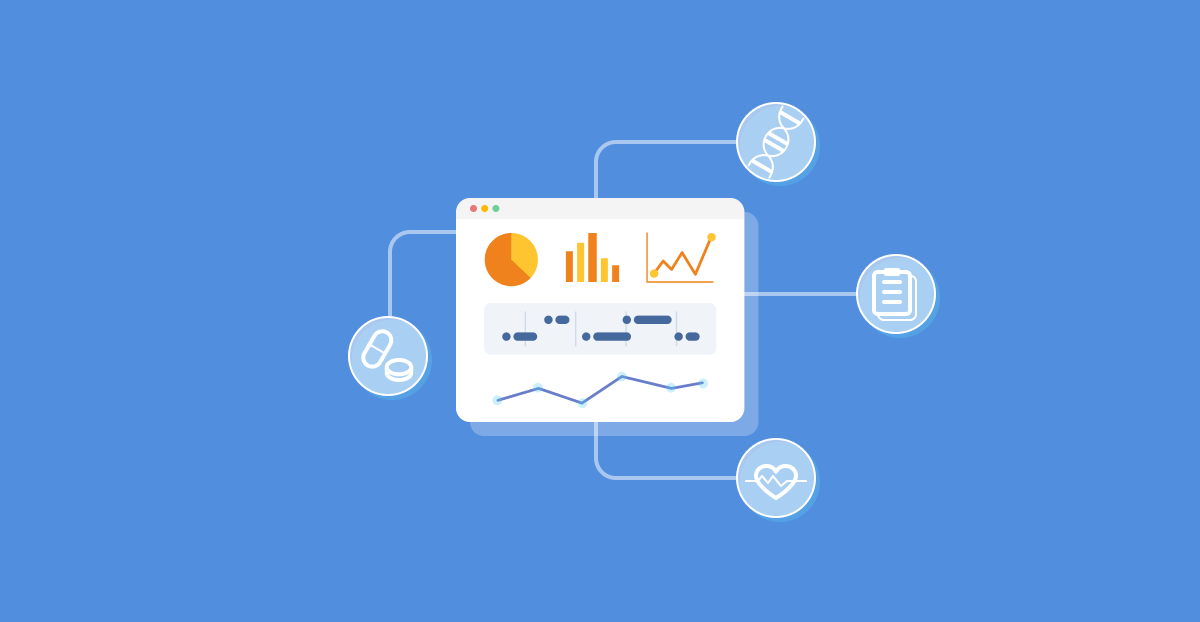
Lumos helps doctors with their medical research and clinical decision by using real-world evidence, to address the topic and observe the cohort that promotes better health decisions and better care. There are 8+ hospitals and over 387 doctors using this tool to verify search topics and have effective health care.
To understand our user and identify the problem. I conducted plenty of interviews to fully understand what problems doctors and researchers are facing while they doing research.
The doctor and hospital need published papers to improve the healthcare quality and get promoted, but there are lots of inconveniences during this process. From these collected pain points, defined the problem into 3 categories.
Doctors might have assumptions, observations of certain connections by given conditions, but there are no tools for them to verify. They have to ask the medical information unit to get the data, or through a research assistant, only doctors in the research unit have an assistant to initialize their study. Either method needs to communicate with these units to get the data sometimes it no even work. And it’s a time-consuming process it takes weeks to testify an idea.
To have a valid and reliable paper, it needs to be enough samples and well-defined conditions to form a cohort. There would be adjustments during the data request, a lot of communication going between the data unit and requester in order to get the right data. And it still needs 2-6 months with the research’s help.
The process of verify is to observe if there are any interventions or factors between conditions and it needs to define cohort and subgroup them in order to compare different cohorts to see if there are differences between conditions, interventions. Most doctors would use excel or saas to do the statistics and both are not easy to use.
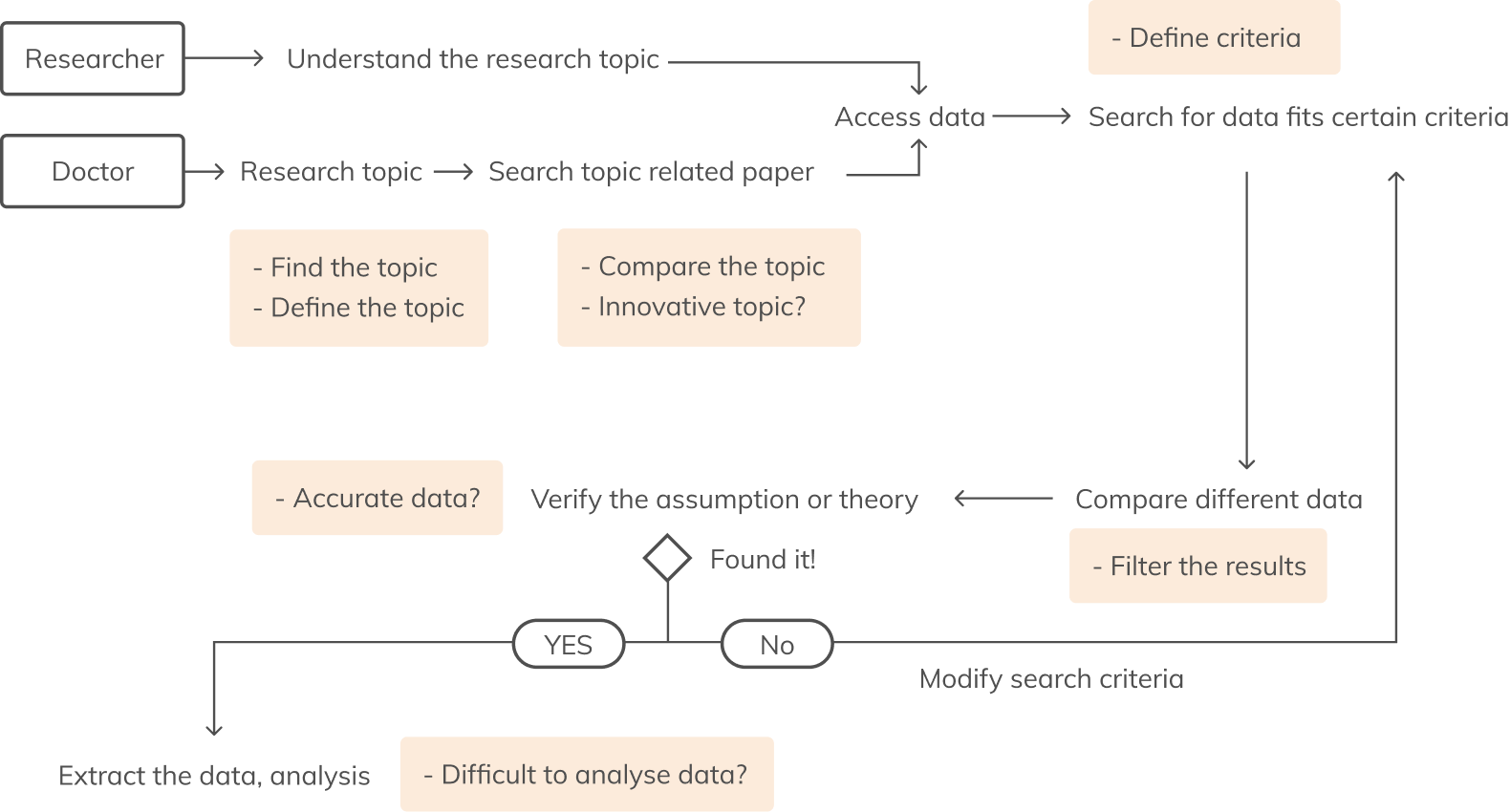

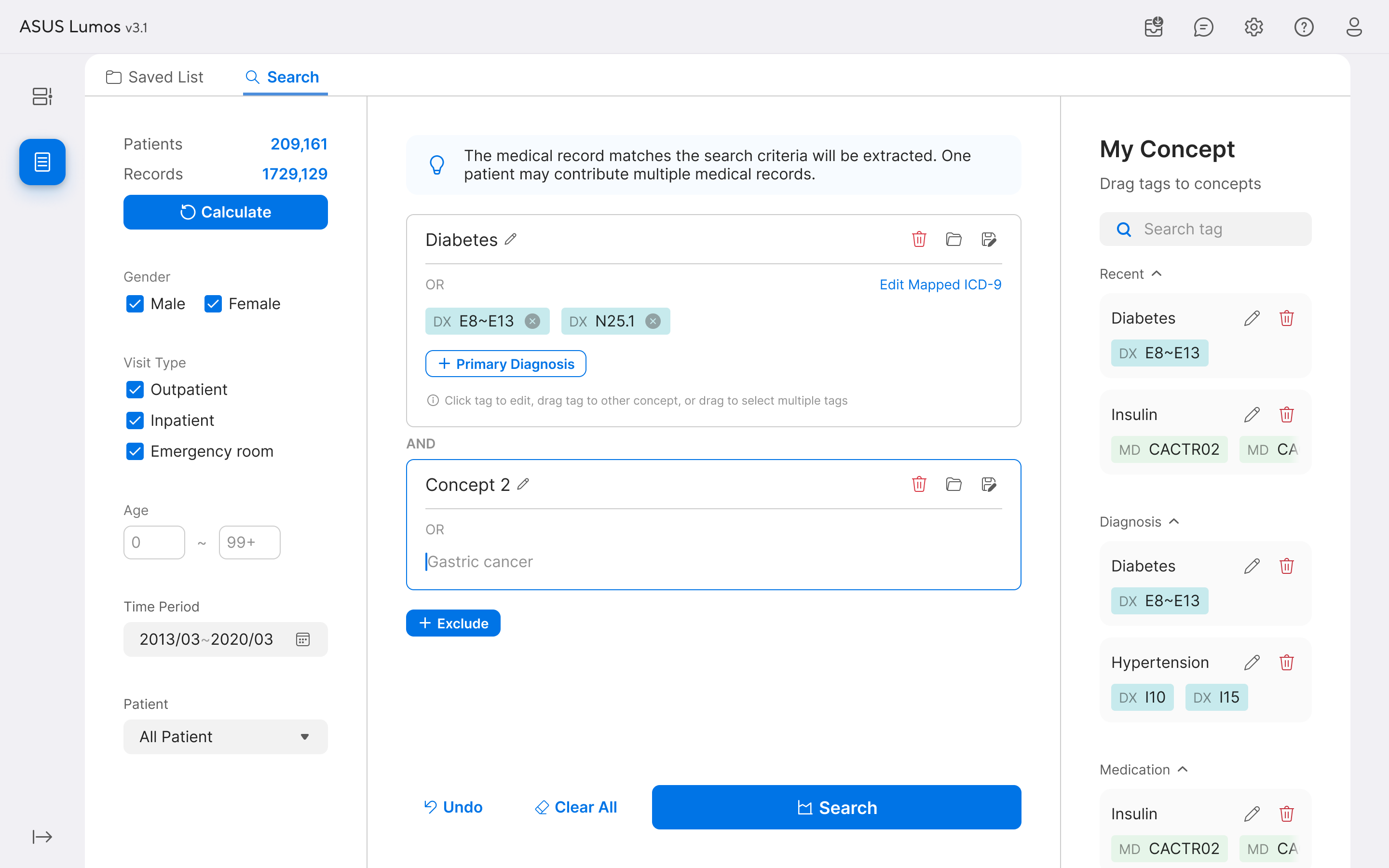
Medical research is a complex process, the doctor would use the data in the hospital for clinical use or National Health Insurance Research Database for the initial exploration and validation but these methods are difficult to use without an expert’s help. So the product value is to make the research process easy, doctors can validate any ideas that benefit the clinical practices. Competitor study has shown that similar products are difficult to use and need to read plenty of documents to understand the logic to start a search. To make a UX differentiation, the most important thing is to shorten the process. The first solution is using NLP to understand the query and build a POC to validate this solution quickly. After a few tests, we quickly found it’s impossible to build a query without a certain language pattern. So our next solution is to build the search portal by using a paper search engine similar design. By using this convention, doctors can easily search a cohort by given condition.
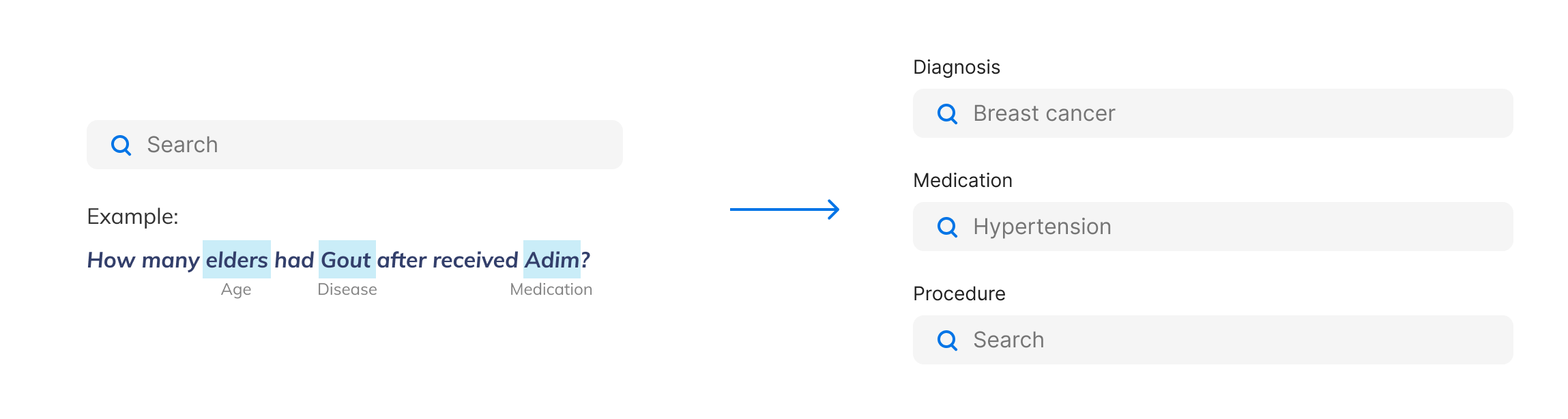
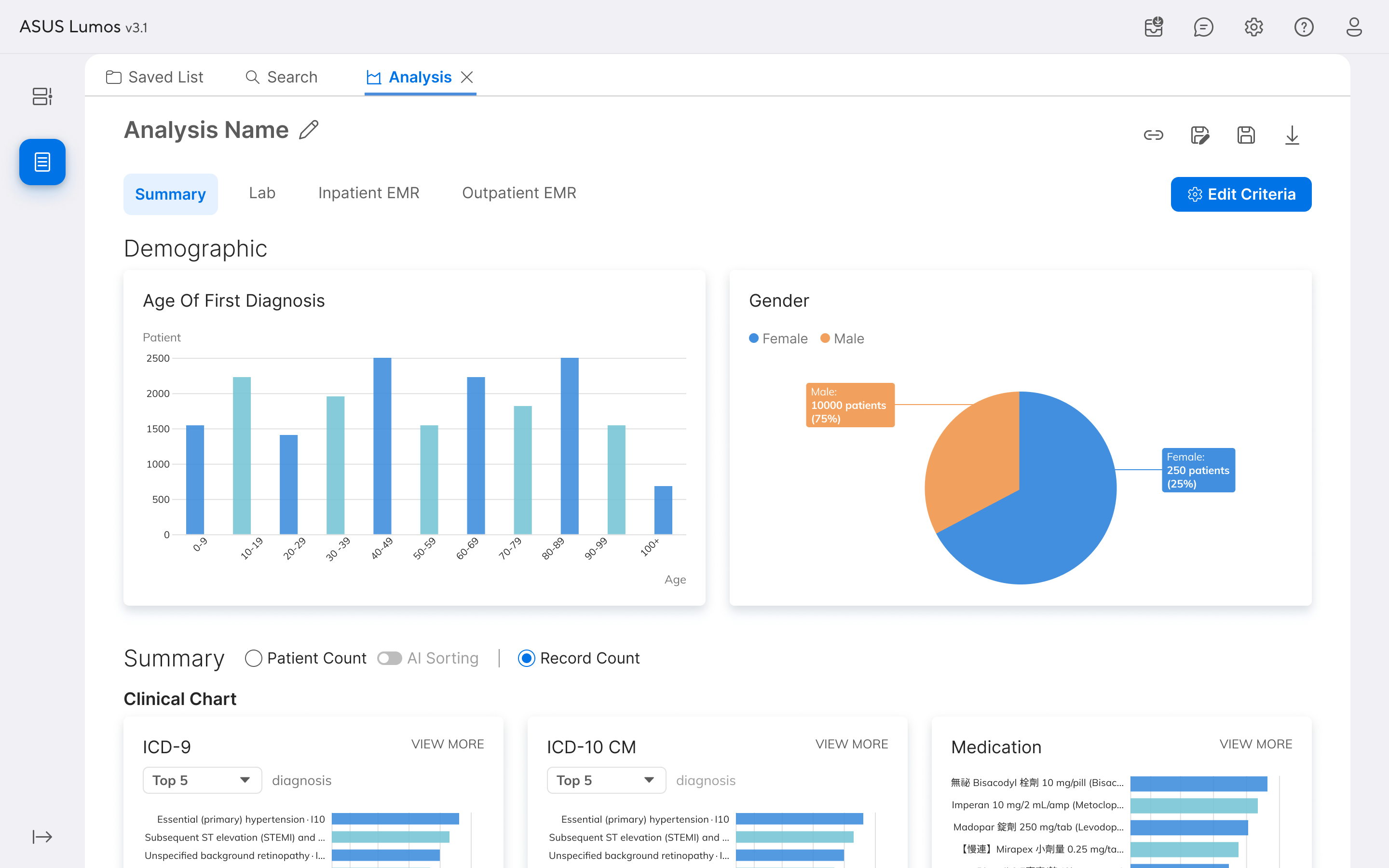
Now the product has achieved the first goal “access data easily”, at this stage doctor can do some simple comparisons just by using the patient counts and observing the factors on the summary page. But the TA started to expect more from this product: to finish a paper. As planned: set up time-sequenced events to filter out a cohort in order to do retrospective research. The UX differentiation of this product is to keep it easy to use, rather than complex product flow, and still have the features to be able to define a cohort for a research topic. To achieve this goal, understanding how to do a research topic is crucial. We formed a task force with medical knowledge, technical, and UX roles to implement the research process into the product flow, by analyzing plenty of research topics to sound out what are the most essential settings. And read similar products’ documents to figure out their search logic and UX pattern. So we came out with the solution by using the medical research process PICO, which stands for population, intervention, comparison, and outcome. We use the PIO as the event setting and arrange then in time sequence. With inclusion and exclusion setting to form a cohort definition.
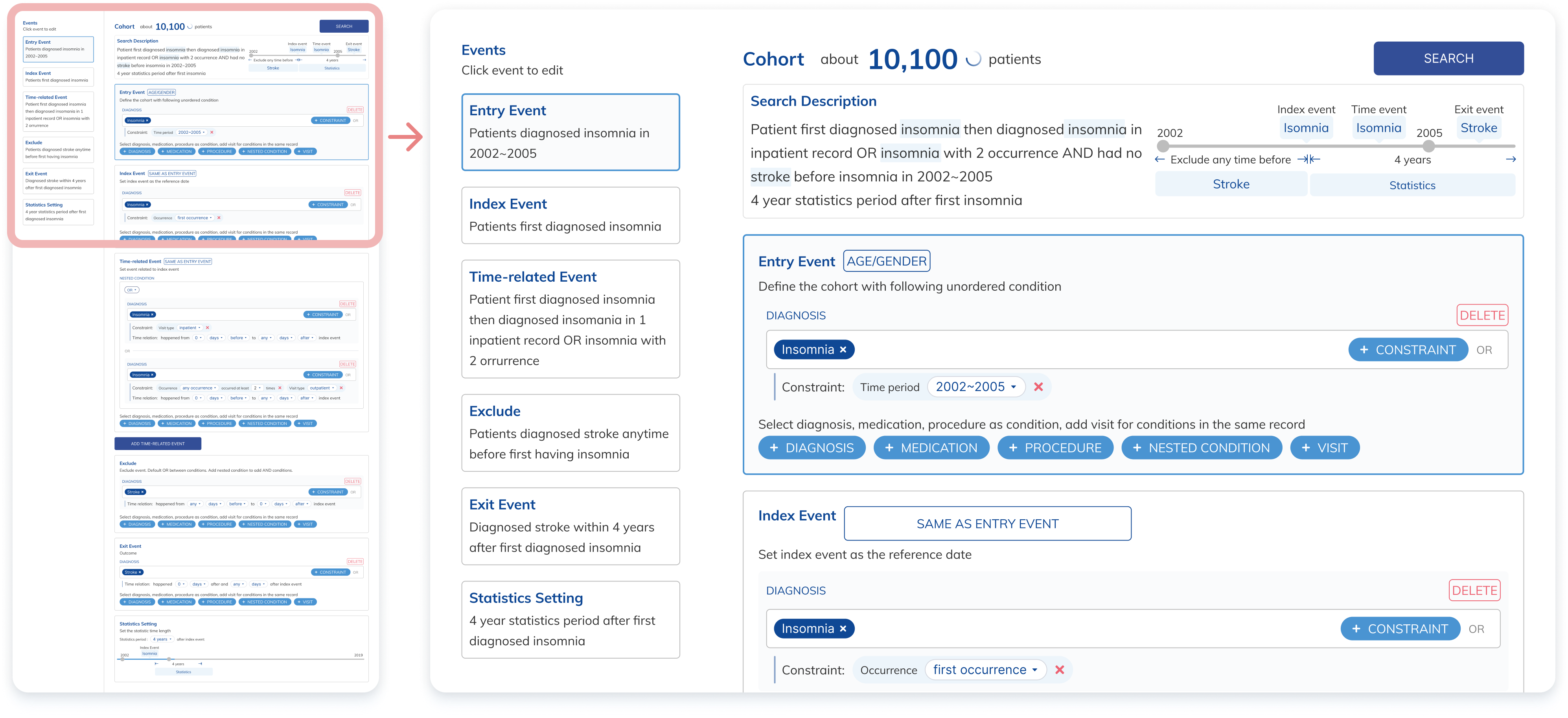


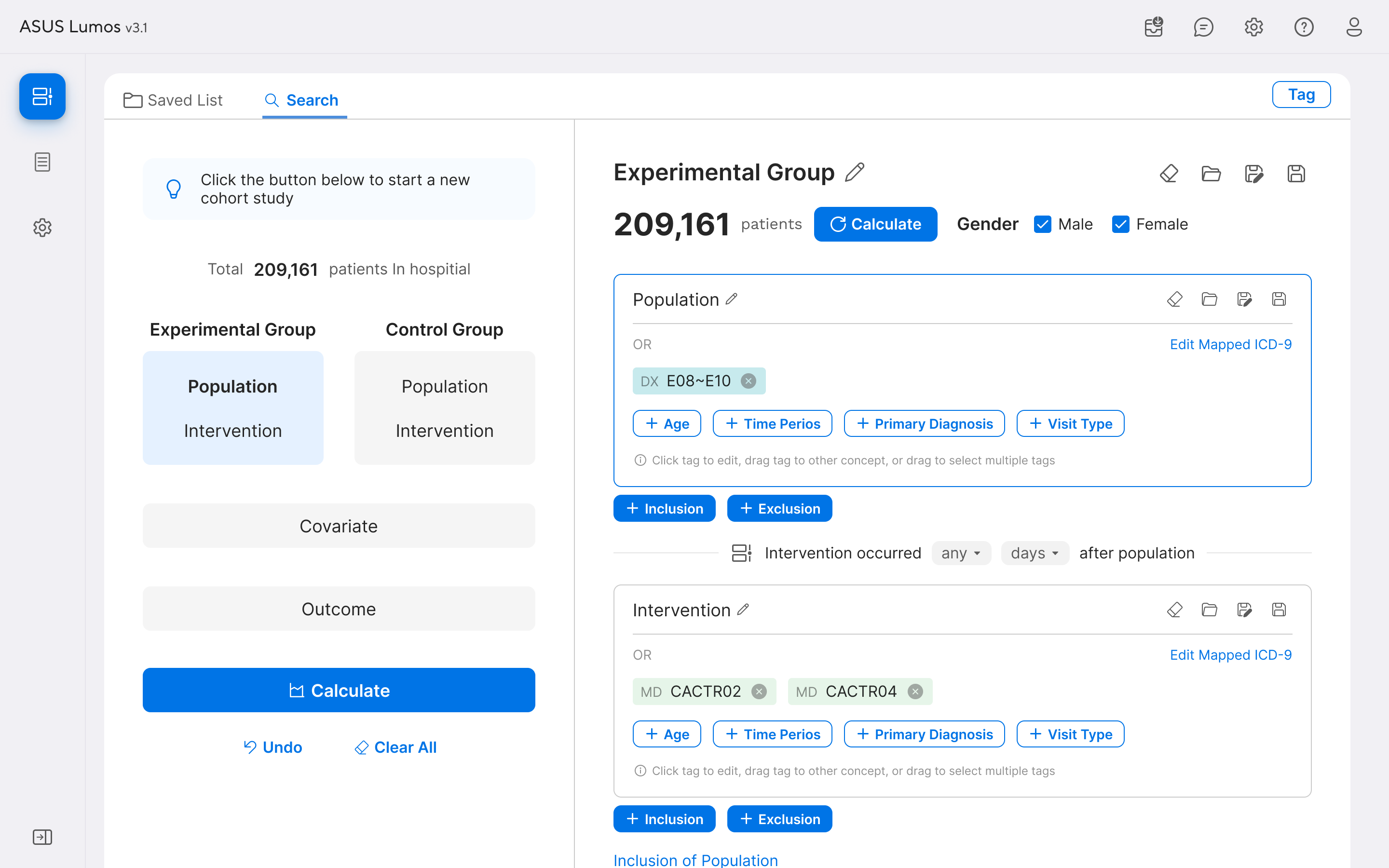
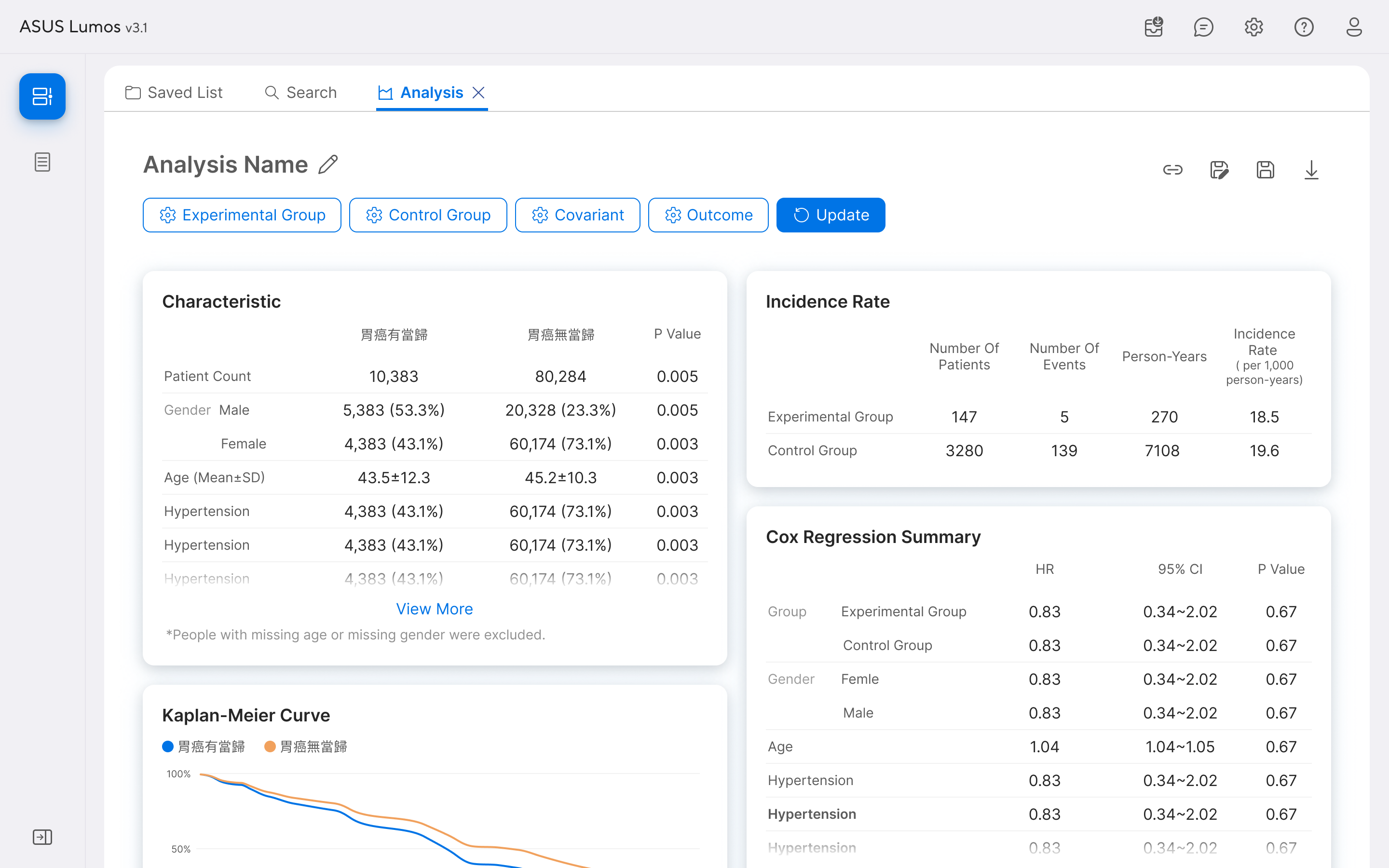
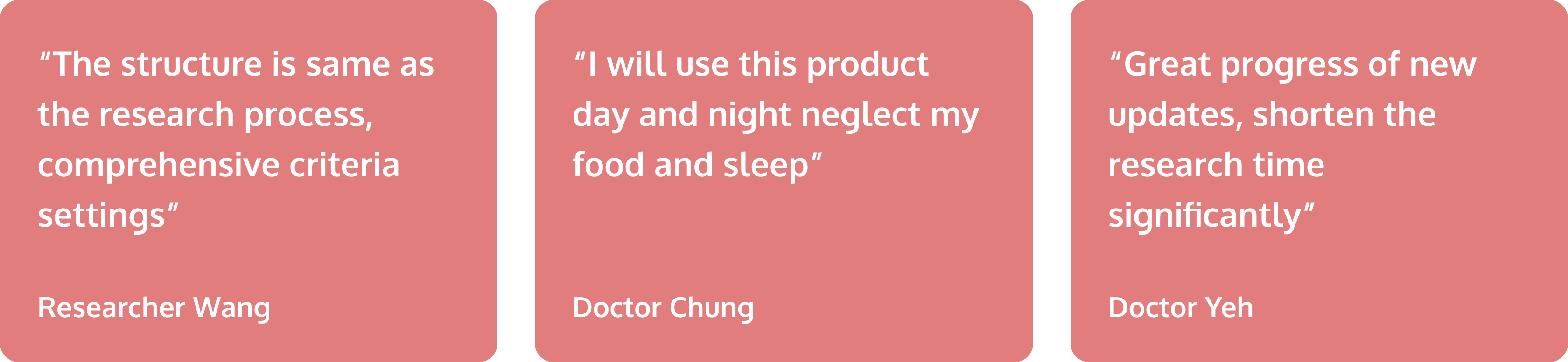
The result of the user testing turned out great, the product has met the goal that users can explore without complex settings. Now users can search the cohort by given event with time relation with real-time patient count and patient list to ask the information unit with IRB process. But there are features missing to the user because there's no comparison. To complete the research process the comparison is crucial, compare 2 cohorts to verify there's a significant difference. This means more complex query settings to achieve the complete research process. I created the first edition of the PICO process with a separate search and comparison page, then the result will show the statistic result to observe the sub-group and the incidence rate. These statistics results used to be run by biostatisticians or researchers who received doctor's requests and go through this process back and forth, but now can easily be done with this product to shorten the research period. This version's user testing has proven the product value, all the feedback is positive, but the usability was not ideal, most users finished the task with difficulty. The issue is the separate search and comparison page interrupts the user's thinking process, and needs to break the medical question into different pages. In the second version, I created a PICO structure on the page, user clicks on the structure to open the criteria setting panel so the user can stay on the same page to set up all conditions. And the user testing result came out great, one of the users said he would use this product day and night and might forget food and sleep. After launching we received positive feedback and got several contracts from the pharmacy which proved this tool can really help with medical research.
"I will use this product day and night neglect my food and sleep"
One of the testing participants, Doctor Chung said.
This is a tool for domain experts, so it is important to fully understand their current solution and what bothered them the most. I asked higher manager for conducting the user research with doctors and by sharing the research results to let everyone know what we are dealing is extremely difficult. Successfully persuaded them that it is crucial to have domain experts, now there are 3 domain experts have joined.
For feasibility, I leverage engineers knowledge to read our competitors documents and adding standardized data to have accurate definition in this product.
The TA is not willing to invest any time with a new tool, especially for doctors they are extremely busy, so the easy-to-use product value is the main focus during the design process. In the spec plannings phase, we consulted many doctors with design solutions, and we simplify the product flow by user feedback, medical correctness, and search logic, only start to develop phase with high task success rate of usability test. This product can reproduce the same result of a published paper in 5 minutes instead of weeks compares to competitors, and our users agree it is really easy to use even without tutorials.
For business goal: revenue, needs to involve pharmaceutical companies that are proven on the competitor. This product can help with a medical trial to search the cohort that meets the criteria, now the product has won a contract as a good start of revenue stream.

The most challenging part would be to fully understand the medical research process with time constraints. Every phase we found more knowledge about medical research, it’s hard to fully understand everything in a short amount of time. I think we could have done better with more research and involving more domain experts in the team earlier to leverage their knowledge to figure out some medical standard definitions. I did plenty of research sharing to let our higher manager to understand that we need this role in the team not just as a consultant, and finally, there are several experts joined in each project.
As a UX designer, I could dig deep and remember that it’s impossible to know everything. So keep researching and testing each phase is the most important part I’ve learned from this product, there are always improvements to elevate the UX differential in each iteration. Lumos tried lots of side projects but ended up failing because the higher manager ignore the UX research results. So this design methodology helps a lot while direction pivot saved the team’s engineering resources.
Contact me via this form